Money buys better players. It buys depth, options and, increasingly in the Premier League, the ability to correct an expensive mistake by making another expensive signing.
What it does not automatically buy is a team.
That distinction has been difficult to ignore over the opening weeks of the Premier League season. Brighton dismantled champions Arsenal 3-0 on Saturday. Brentford beat Chelsea by the same scoreline the previous evening. Tottenham have spent more than £300 million on players this summer and entered the international break bottom of the table. Manchester United have five points from five matches and are again facing questions about intensity and collective purpose.
None of those situations is identical, and five games is far too early to reach sweeping conclusions about an entire season. Arsenal, in particular, should not suddenly be treated as a broken side because of one heavy defeat. But there is a common thread worth examining.
Premier League clubs can assemble extraordinary collections of individual talent. The more difficult task is making those players look as though they belong to the same football team.
Brighton showed what clarity can look like
Brighton’s 3-0 victory over Arsenal was striking not simply because of the scoreline, but because the champions were second best physically and technically.
Mikel Arteta subsequently accused his players of failing to respect the game, while Sky Sports described a scoreline which, if anything, flattered Arsenal.
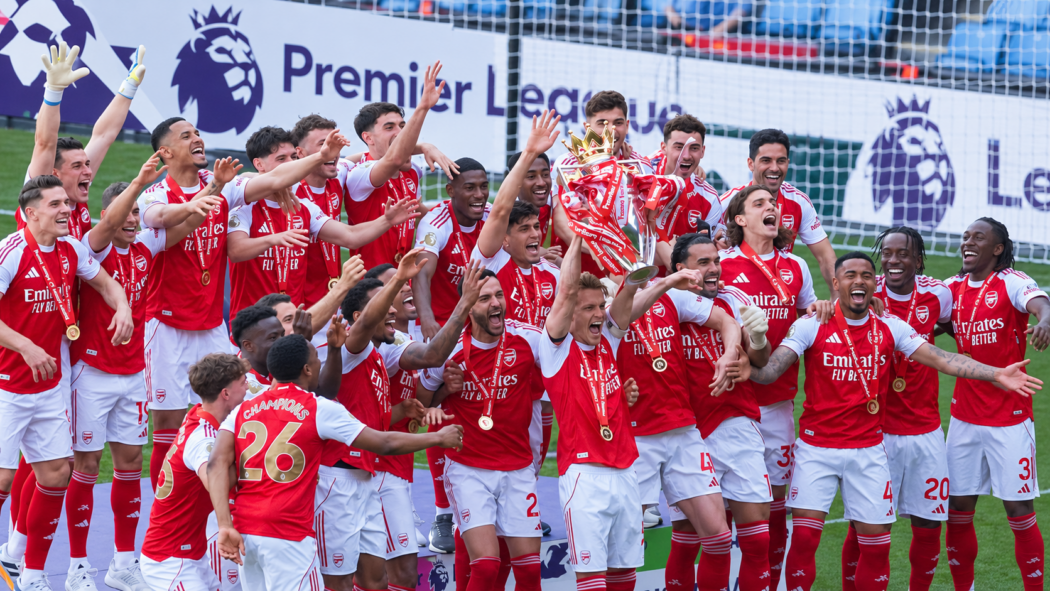
That should be treated as a bad afternoon for the champions rather than evidence of some wider collapse. Arsenal arrived on the south coast having won their opening league matches. Yet Brighton demonstrated something that has become one of the defining characteristics of well-run Premier League sides: a recognisable way of playing which does not depend on having the most expensive individual players on the pitch.
The same weekend produced another example in west London. Brentford beat Chelsea 3-0, scoring three times in the second half and extending Chelsea’s winless league run to three matches.
Brighton and Brentford have very different approaches, but both illustrate the value of players understanding what is expected of them. Recruitment works best when it serves that structure rather than becoming the structure itself.
Tottenham are the clearest warning
No club illustrates the other side of the argument more starkly at present than Tottenham.
Sky Sports estimates Spurs spent around £334 million gross during the summer window. Their net spend was around £176 million.
Yet five league matches have brought two points and two goals, leaving Roberto De Zerbi’s side bottom of the table going into the break. Their £300 million-plus rebuild has not yet produced a convincing collective performance.
That does not mean the recruitment has failed. New players need time, managers need training-ground work and a squad rebuilt in one window will rarely arrive fully formed.
But Tottenham are a reminder that transfer spending can create expectations much faster than it creates understanding.
A new midfielder may improve passing quality. A new forward may add goals. A new defender may solve an individual weakness. None of those things guarantees that eleven players will press together, protect the same spaces, recognise the same triggers and make complementary decisions when possession changes hands.
Manchester United’s numbers tell a complicated story
Manchester United’s problems are slightly different.
Gary Neville strongly criticised their work without the ball during Sunday’s 1-1 draw at Fulham, and the numbers give his concerns some substance. According to Sky Sports analysis using Opta data, United are joint-bottom of the Premier League for high-speed runs and covered 6.5 kilometres less than Fulham at Craven Cottage.
But even here, the easy conclusion is not necessarily the correct one.
United also had 29 shots against Fulham, registered 36 penalty-area entries and, after five matches, had produced one of the league’s stronger expected-goals totals. Michael Carrick rejected the suggestion that his side simply lacked energy.
That makes the more interesting question one of organisation rather than effort alone. Running more is useful only if players run at the right moment and for the same tactical purpose.
A team can work extremely hard and still be disjointed. Equally, a side which controls space intelligently may not need to turn every game into a running competition.
Recruitment needs to answer a football question
The temptation after every disappointing result is to identify the next signing. Football’s transfer economy encourages it. Weaknesses are discussed as positions to be filled, and solutions arrive with a fee attached.
But good recruitment starts with a more basic question: what is the team trying to become?
Manchester City spent more than any other Premier League club this summer, according to Sky Sports, so this is plainly not an argument that spending is irrelevant. Elite players matter enormously. The richest clubs retain structural advantages which smaller rivals cannot simply organise away.
The point is that money works best when it reinforces an existing football idea.
Brighton’s victory over Arsenal does not suddenly make them title favourites. Brentford’s win over Chelsea does not prove that smaller budgets will consistently beat larger ones. Nor does Tottenham’s disastrous start prove that their new signings cannot eventually succeed.
What the weekend did provide was another reminder that football teams are more than the combined market value of their players.
The Premier League’s financial power ensures that transfer records will continue to fall. But the clubs making the smartest progress will still be those able to answer the simplest question of all: once the spending stops and the match begins, does everyone know what the team is supposed to be?