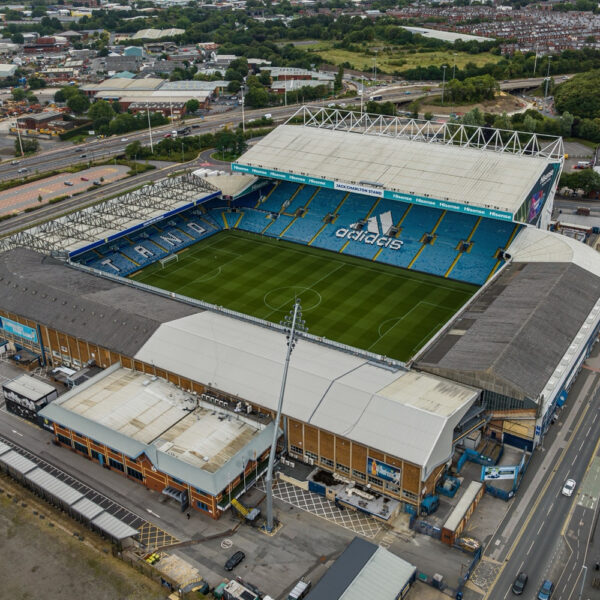
Manchester United may be the bigger name in Sunday’s meeting at Elland Road, but Leeds United have made the more convincing start to the Premier League season. For once, the build-up to this old rivalry is dominated by questions about the visitors rather than the home side.
Daniel Farke’s team go into the match eighth in the table with nine points from six games. Manchester United are 14th with six points, having managed just one league victory.
That alone represents an unusual reversal of fortunes. For the first time since September 2002, excluding opening-day fixtures, Leeds enter a Premier League meeting between the clubs above their opponents in the table.
There is also a statistical case for backing the home side. The Opta supercomputer gives Leeds a 41.8% chance of winning, compared with 31.6% for Manchester United and 26.7% for a draw.
But there is more to this fixture than league positions and predictions. United’s attacking figures are surprisingly strong, while Leeds are still establishing themselves as a consistent Premier League force. Sunday’s match could tell us something important about the direction of both clubs.
Leeds have earned the right to be confident
Farke deserves considerable credit for what he has achieved at Elland Road. Leeds have developed into a competitive, organised side who are increasingly difficult to beat, particularly on their own ground.
They are unbeaten in their last seven Premier League home matches, winning four and drawing three. Four of those games have produced clean sheets, and Leeds have not conceded more than once in any of their last 10 home league fixtures.
Those are impressive numbers for a club still working to establish itself securely in the top flight.
Leeds have also shown they can compete with stronger opposition. Their 4-1 home victory over Newcastle United demonstrated their attacking potential, while last weekend’s 2-1 defeat at Arsenal was hardly a reason for alarm. They took the lead against the reigning champions before eventually losing.
There has been a noticeable improvement in the balance of the team since Farke moved towards a back three. Leeds have become more difficult to play through, while retaining enough attacking ambition to trouble opponents when possession changes hands.
It would be wrong to suggest everything has been transformed overnight. Six league matches are a relatively small sample, and Leeds have drawn three of them. But their progress is clear enough to take seriously.
Perhaps the most telling sign is that Farke is now being asked whether his side should be considered favourites against Manchester United.
The Leeds manager has approached that suggestion cautiously. In his pre-match comments, he acknowledged the growing confidence around Elland Road but pointed out that Manchester United still possess a squad with considerably more Premier League experience.
That is a sensible distinction. Leeds have reasons to believe they can win, but they cannot afford to confuse confidence with entitlement.
Manchester United’s attacking figures tell a different story
United’s start to the season has been poor by any reasonable measure. Six points from six matches represents their lowest total at this stage since 1986-87, and they have failed to keep a clean sheet in any of those games.
The defensive problems are difficult to ignore. United have too often left themselves exposed, and the relationship between their attacking ambitions and defensive organisation remains unconvincing.
Yet the attacking statistics suggest this is not a team incapable of creating opportunities.
According to Opta, Manchester United have registered 125 shots in their opening six league matches, more than any other Premier League side. They have also recorded a league-high 205 touches inside the opposition penalty area.
Those are not the figures normally associated with a team struggling near the bottom half of the table.
United have scored nine league goals, however, and their attacking activity has not translated into enough victories. A high shot count does not necessarily mean a high number of clear chances. Nevertheless, it suggests that simply accusing United of lacking attacking intent misses an important part of the problem.
There is talent in the squad. Bryan Mbeumo, Matheus Cunha and Bruno Fernandes are capable of creating and converting chances. Carrick has options going forward, even if injuries have complicated his selections.
The greater concern is whether United can attack effectively without sacrificing their defensive balance. Too often, their opponents have been able to exploit the space they leave behind.
That is particularly dangerous against a Leeds team comfortable with winning possession and moving the ball forward quickly.
Carrick needs results, but the problems run deeper
Michael Carrick’s position has come under increasing scrutiny after a disappointing opening to the campaign.
It is worth remembering that he took Manchester United to third place last season after replacing Ruben Amorim. His appointment on a permanent basis followed a substantial improvement in results and performances.
That progress now feels a long way away.
United travel to Elland Road without a victory in their previous five matches in all competitions. Tuesday’s 2-0 Champions League defeat against Atlético Madrid added to the pressure, as did the subsequent controversy surrounding Lisandro Martínez.
The defender publicly questioned the club’s recruitment policy and criticised technical director Jason Wilcox following the defeat in Madrid. Martínez subsequently apologised, and Carrick confirmed that the matter had been dealt with internally.
According to Reuters, Carrick has made clear that Martínez remains available for Sunday’s match.
It is another unwanted distraction for a manager who needs to concentrate on improving results.
But it would be simplistic to place all responsibility on Carrick. United have spent years changing managers, recruitment strategies and playing styles without establishing the consistency expected of a club with their resources.
The manager must answer for the team’s performances, particularly its defensive weaknesses. But questions about squad construction, recruitment and the club’s wider football strategy cannot simply be ignored whenever results deteriorate.
United have enough quality to be performing considerably better than 14th place. Carrick’s challenge is to turn that individual ability into a team that functions consistently at both ends of the pitch.
The tactical battle could decide the afternoon
Elland Road will undoubtedly provide an intense atmosphere, but Leeds cannot rely on emotion alone. Their greatest opportunity may come from the tactical problems they can create for Manchester United.
Farke’s side have become more disciplined in their defensive positioning. If they remain compact through midfield and press effectively when opportunities arise, they can make it difficult for United to build attacks through central areas.
Winning possession is only half the task. Leeds must then use the ball intelligently, particularly when United commit players forward and leave space available for counter-attacks.
Noah Okafor offers a reminder of what Leeds can do in those situations. His two goals helped secure a 2-1 victory at Old Trafford in April, ending a run of 10 Premier League meetings without a Leeds win against their rivals.
That result was not simply a case of Leeds taking two fortunate opportunities. They produced an expected goals figure of 2.57 compared with United’s 1.27, despite having less possession.
United, meanwhile, will need to show greater patience and control. There is little value in having large amounts of possession or accumulating shots if their attacks are rushed and their defence remains vulnerable.
Carrick must find a way to involve his attacking players without allowing Leeds to dictate the transitions. His midfield selection and the protection offered to the defence could be just as important as the forwards he chooses.
There is a balance for Farke to strike as well. Pressing United too aggressively could leave spaces that players such as Mbeumo and Cunha are capable of exploiting.
This is not a fixture in which either manager can afford to confuse intensity with control.
Has the balance of this rivalry really shifted?
History still offers Manchester United some encouragement. They are unbeaten in their last seven away league meetings with Leeds, winning five and drawing two. Their most recent league defeat at Elland Road came in September 2002.
Leeds’ victory at Old Trafford in April has nevertheless changed the immediate mood surrounding this fixture.
For much of the Premier League era, Manchester United have approached meetings between the clubs from a position of considerably greater strength. This time, the home side have the better league record and the advantage in Opta’s pre-match assessment.
That does not mean Leeds have suddenly overtaken Manchester United as a football institution, nor that one result will settle Carrick’s future or define Farke’s progress.
What it does show is that reputation alone counts for very little once the teams take the field.
Leeds have established a clear approach and are beginning to see the rewards. Manchester United possess substantial individual quality but have yet to find the consistency that should accompany it.
Sunday’s match is an opportunity for Leeds to demonstrate how far they have come, and for United to show that their poor start does not tell the whole story.
Whatever happens, the more important question for both clubs will be whether they can sustain improvements beyond one fiercely contested afternoon.
Match information: Leeds United v Manchester United, Premier League, Sunday 18 October 2026, 14:00 BST, Elland Road. Live in the UK on Sky Sports Main Event, with streaming available through NOW.