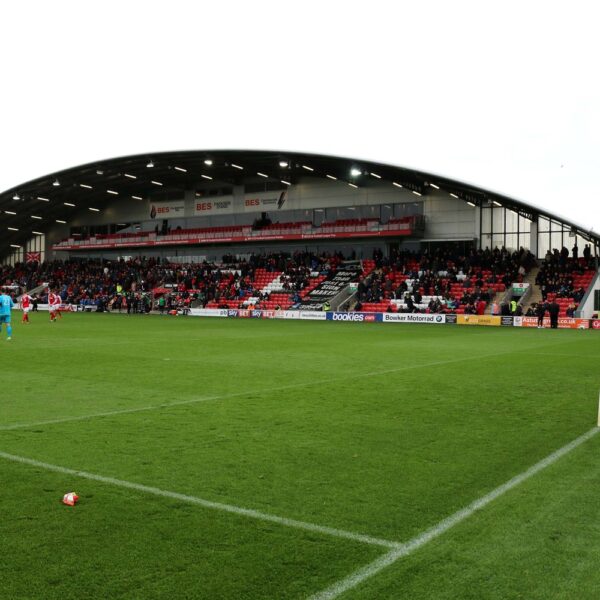
Fleetwood Town have produced one of the greatest shocks in League Cup history, knocking Premier League champions Arsenal out of the Carabao Cup on penalties after a remarkable night at Highbury Stadium.
The League Two side, sitting 18th in the fourth tier and 84 places below their opponents in the English football pyramid, won 5-3 in the shootout after holding Mikel Arteta’s side to a 1-1 draw on Tuesday evening.
Goalkeeper Jay Lynch was the hero, saving Bruno Guimarães’s penalty before 19-year-old defender Conor Haughey converted the decisive kick to send Fleetwood into the quarter-finals for the first time in their history, an achievement confirmed by the EFL.
What followed was a pitch invasion as supporters celebrated a result that will be remembered in Fleetwood for generations.
For Arsenal, it was a humiliating exit from a competition they had every reason to believe they could win. For Fleetwood, it was a night that showed why knockout football still produces moments that league positions and financial resources cannot predict.
Fleetwood refuse to follow the script
The contrast between the two clubs could hardly have been greater.
Arsenal arrived as Premier League champions, having won seven of their opening eight league matches this season. Fleetwood, meanwhile, had managed just one victory in their previous eight League Two fixtures and were only two points clear of the relegation places.
Arteta did not field an entirely inexperienced side, either. Viktor Gyökeres and Kai Havertz both started, while Martin Ødegaard was introduced at half-time.
Yet Fleetwood were not intimidated.
The evening began unusually when an unauthorised drone flying above the stadium forced a lengthy stoppage shortly after kick-off.
Once play resumed, Arsenal initially threatened, but it was the home side who struck first.
In the 21st minute, Aaron Loupalo-Bi outmuscled young Arsenal defender Marli Salmon before finishing past goalkeeper Illan Meslier from a tight angle.
The goal brought Highbury Stadium to life and gave Matt Lawlor’s side something to protect.
Fleetwood defended with discipline, denied Arsenal space in dangerous areas and reached half-time with their slender advantage intact.
Arsenal fight back but cannot finish the job
Arsenal responded five minutes after the restart when Gyökeres scored from close range following good work by Ceadach O’Neill, who was making his senior debut.
With the scores level and Arsenal beginning to create clearer opportunities, the difference in quality appeared likely to tell.
Havertz missed chances to put the visitors ahead, while Myles Lewis-Skelly also failed to convert from close range.
But Fleetwood refused to surrender. Lynch produced a series of important saves, including outstanding late interventions to deny Ben White and Ødegaard.
The home side even threatened to snatch victory themselves when Will Davies forced Meslier into action late in the second half.
Arsenal’s task became more complicated in the closing minutes when 16-year-old Max Dowman received a straight red card after kicking out following a challenge from Fleetwood midfielder Harrison Neal.
The dismissal left Arsenal with ten men and added another difficult moment to an increasingly frustrating evening for Arteta.
As Reuters reported in its account of the match, Arsenal had opportunities to win in normal time but could not find a way past Fleetwood’s determined defence.
With neither side able to find a winner, the tie went straight to penalties.
Lynch and Haughey make Fleetwood history
The shootout produced five excellent Fleetwood penalties, with the League Two players showing remarkable composure under pressure.
Arsenal’s first three attempts were converted, but Lynch saved Guimarães’s fourth spot kick to give the hosts the opportunity to complete an extraordinary victory.
Haughey stepped forward and confidently dispatched the decisive penalty past Meslier.
The celebrations were immediate. Supporters poured onto the pitch as Fleetwood’s players and coaching staff embraced, fully aware of the scale of their achievement.
Speaking in his post-match interview with Sky Sports, manager Matt Lawlor revealed that his players had not even practised penalties before the match.
“We haven’t practised once,” he admitted, explaining that the players had taken responsibility for their own spot kicks.
Lawlor, who grew up locally, described the victory as an emotional occasion for himself, his family and the community.
He also acknowledged the practical reality of facing Arsenal. Fleetwood were never likely to dominate possession against the champions, so the approach was to restrict space, frustrate their opponents and make the most of their opportunities.
It worked.
Arteta faces questions after another cup disappointment
For Arsenal, the defeat raises uncomfortable questions about their performance and game management.
There were opportunities to win the match in normal time, particularly after Gyökeres equalised, but the visitors lacked composure in front of goal.
Dowman’s dismissal added to the frustration. Television cameras showed Arteta reacting angrily as the teenager left the pitch, although the manager was reluctant to discuss the exchange in detail afterwards.
The responsibility for this result, however, cannot rest on a 16-year-old alone.
Arsenal had sufficient experience and attacking quality on the pitch to defeat opponents struggling near the bottom of League Two.
Their inability to turn possession and chances into goals was just as important as the late red card.
There is little reason to suggest that one cup defeat will derail Arsenal’s wider ambitions. But it was an opportunity for another domestic trophy, and one they will regret wasting.
Why Fleetwood’s victory deserves to be celebrated
English football’s financial divide has widened considerably in recent decades, making results of this kind increasingly difficult for smaller clubs to achieve.
Premier League teams have access to resources, facilities and playing squads that clubs in League Two can only dream of matching.
That makes Fleetwood’s achievement all the more impressive.
This was not simply a case of Arsenal playing badly or failing to take their chances. Fleetwood earned their opportunity through organisation, determination and a goalkeeper who delivered when his team needed him most.
The result also follows Grimsby Town’s memorable League Cup victory over Manchester United last season, another reminder that the competition can still provide its share of remarkable upsets.
For Fleetwood, the emotional impact extends well beyond reaching the next round. In The Guardian’s account of the celebrations, Lawlor spoke about sharing the moment with people he had known throughout his life and the pride of giving his hometown such a memorable occasion.
Fleetwood now have a place in the quarter-finals and will discover their next opponents following Wednesday’s remaining fourth-round ties.
Whatever happens next, this result will remain part of the club’s history.
For the thousands who witnessed it at Highbury, a struggling League Two side beating the champions of England was the sort of occasion that makes football special.
And on Tuesday night, Fleetwood Town deserved every moment of their celebration.