The Asian Cup will not take place in January 2027 after all. For Premier League clubs with Asian internationals, that brings immediate relief. For Singapore, whose national team has qualified on merit for the first time, it means almost another year of waiting.
On 3 November 2026, the Asian Football Confederation (AFC) announced that the tournament in Saudi Arabia, originally scheduled for 7 January to 5 February 2027, would instead be held from 23 December 2027 to 21 January 2028. The proposed new dates still require FIFA approval.
The AFC cited exceptional regional circumstances, logistical problems and travel disruption. BBC Sport linked the decision to deadly attacks on Saudi Arabia, including a missile strike on Riyadh’s international airport in October. The governing body’s statement did not attribute the postponement to any single incident, but said the change was necessary to protect those involved in the tournament.
It is the second successive Asian Cup to be rescheduled. China relinquished the hosting rights for the 2023 tournament amid Covid-19 restrictions, and the competition was eventually staged in Qatar in early 2024.
Not every Premier League club benefits equally
The immediate consequence for English clubs is straightforward: players who might have been absent on international duty in January 2027 can now remain with their clubs, subject to fitness and other commitments. At least 11 potential call-ups across nine current Premier League clubs have been identified, although no final tournament squads have been selected.
Aston Villa provide perhaps the clearest example of what was at stake. Goalkeeper Zion Suzuki is an established Japan international, and Villa must balance Premier League matches with their Champions League campaign. BBC Sport reported that Villa could have been without him for at least seven games had Japan reached the final under the original schedule. Losing a regular goalkeeper across several competitions is a substantial concern, particularly during a congested month.
Liverpool’s position is different. Wataru Endo remains an international option for Japan, but his first-team opportunities at Anfield have been limited. An Asian Cup call-up would have reduced Liverpool’s midfield cover rather than removed a regular starter. The postponement is welcome, but its immediate significance for Liverpool is not the same as for Villa.
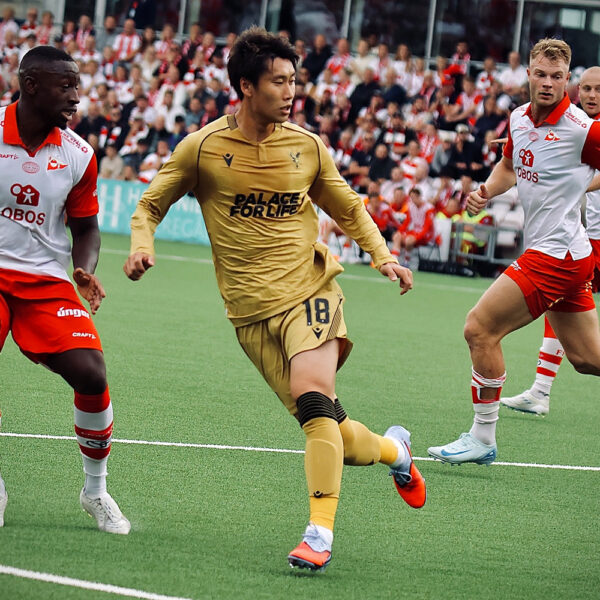
Crystal Palace could have faced the simultaneous absence of two Japan internationals, Takehiro Tomiyasu and Daichi Kamada. Their roles differ: Tomiyasu provides defensive options, while Kamada operates in midfield. Losing both during a demanding part of the season would still have put additional pressure on Palace’s squad.
The list extends beyond those three clubs. Brighton’s Kaoru Mitoma, Leeds United’s Ao Tanaka, Ipswich Town’s Daizen Maeda, Hull City’s Hidemasa Morita and Australia defender Lucas Herrington, Coventry City’s Tatsuhiro Sakamoto and Manchester City’s Uzbekistan defender Abdukodir Khusanov are among the other potential participants. The Japan Football Association’s squad announcement on 4 November included Sakamoto, Suzuki, Kamada, Maeda and Tanaka, although that selection does not determine who will make the Asian Cup squad.
There is a difference between a player being eligible for international selection and a club actually losing a first-team regular. That distinction is important when assessing who has gained most from the change.
The clash moves, but it does not disappear
For English clubs, the reprieve may last only one season. The new window runs through Christmas and New Year in 2027–28, when Premier League fixtures typically come thick and fast. Clubs with Asian internationals could then lose players during one of the busiest periods of the domestic calendar.
By that point, transfers, injuries and international selections may have changed the picture. It would be premature to assume that every player currently identified will be at the same club, or even in the tournament squad, in December 2027.
The problem, however, remains: a winter continental championship overlaps with the English league season. Rescheduling the Asian Cup gives Premier League clubs time to prepare, but it does not resolve that conflict.
There have already been consequences for Saudi domestic football. The Saudi Pro League postponed a round of fixtures following the announcement, saying the change would allow games to be distributed more evenly across the season.
What the extra year means for Singapore
In Singapore, the postponement has a different significance. The Lions secured their place at the Asian Cup with a 2–1 victory away to Hong Kong on 18 November 2025. Shawal Anuar and Ilhan Fandi scored in a second-half comeback after Matt Orr had given the hosts the lead.
It was the first time Singapore had qualified for the finals on merit. Their only previous appearance came in 1984, when they took part as hosts. More than four decades later, the achievement offered players and supporters a rare opportunity to test themselves on the continental stage. Singapore have been drawn in Group D alongside Australia, Iraq and Tajikistan, as Football Australia confirmed.
The delayed start affects preparations as well as expectations. The Football Association of Singapore (FAS) had left December 2026 and January 2027 free of Singapore Premier League matches to accommodate the original tournament. That domestic calendar now needs reconsideration.
FAS general secretary Badri Ghent said that the safety of players, staff and supporters came first and that the association would work with clubs and other stakeholders on revised arrangements. Captain Hariss Harun said the delay had been expected and that the team’s focus remained unchanged. Both responses were reported by The Straits Times.
For supporters considering a trip to Saudi Arabia, the new dates may also require changes to travel and leave arrangements. The cost implications cannot yet be established without confirmed fixtures, ticket details and travel options.
Singapore also face a question over continuity on the touchline. Gavin Lee was appointed permanent national coach in November 2025, when CNA reported that he had signed an 18-month contract. On that basis, the deal would run to around May 2027, several months before the rescheduled finals.
That does not mean a change of coach is inevitable. It does mean the FAS will need to decide how best to provide continuity through the tournament. Extending or renegotiating Lee’s agreement could preserve the work already undertaken; prolonged uncertainty would make preparations more difficult.
There is a possible sporting benefit, too. Another year gives younger players more opportunities to earn places in the squad and gives those recovering from injury additional time. Against that, experienced players will be a year older when the competition begins, and maintaining momentum after a landmark qualification will be a challenge.
For Australia, the national federation has welcomed the postponement on safety grounds while continuing preparations for upcoming fixtures. Singapore’s circumstances are different, and the effect of the delay on their wider international calendar will depend on plans still to be confirmed.
There are sound reasons for moving the tournament, and the safety of players and supporters must come first. Even so, the consequences are uneven. Premier League clubs gain an unexpected reprieve; Singapore’s reward for qualifying on merit is pushed further into the future.
The question now is whether English clubs use the extra time to plan for the disruption in 2027–28, and whether Singapore can turn another year of preparation into an advantage when their long-awaited Asian Cup campaign finally begins.